Toddlers’ Play-Based Learning: Development of skills through different
types of play
Toddlers play based learning is more than just having fun, It is the way they explore,
understand, experiment things around them accordingly. When toddlers play, whether the
are building with blocks or just pretending to cook, it is how they are actually
exploring and learning. This is the way of practice thinking, finding solutions to it,
and developing important skills. When caretaker and parents take part with them, it add
on to the extra value, offering guidance, encouragement and a sense of connection.
Brain in under the phase of developing new connection in the early years, and play helps
these toddlers to strengthen the one they use most. Social, emotional, and cognitive
growth is shaped when child is involved in unstructured free play or simple games with
parents. Playful learning sets the stage for curious learners, who later on develop
confidence.
What Toddlers Learn From Different Types of Play
Toddlers play-based learning helps them in learning and building new and valuable skills
for life.
Every object they play with, helps their brain and body grow. Here is what toddlers
actually learn when they play:
- Motor skills and senses: When toddler turn their head listening to
your voice or shake a rattle. It means they are learning to use their eyes, ears,
and body together in synchronised way.
- Use hands and finger control: When toddler grow, there is a change
in hand moments. From closed fist to using of fingers. Pointing out with finger and
not with closed fist, along with picking up of small objects.
- Usage of both the hands: Helps toddlers to manage both the hand at
the same time, but with different task. For example: one hand painting while the
other hand holding the paper.
- Development of Social Skills: Playing with along with other kids
help them learn social skills like sharing, being kind to others, taking turns and
joining of group games.
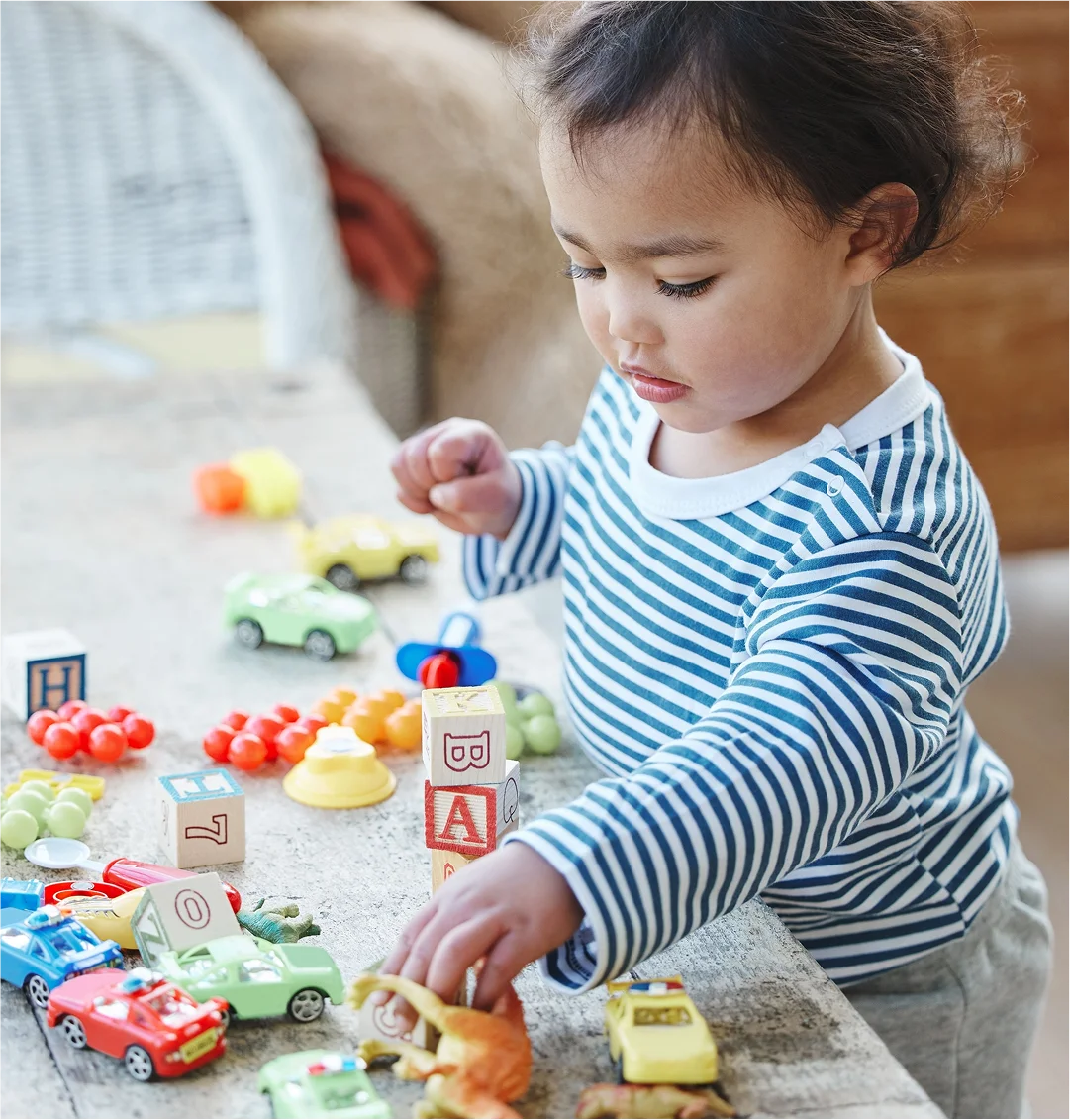
- Sorting and grouping: Engaging your kids with toys like stacking
cups helps them learn how to put things in order, differentiate between small and
large objects and grouping of similar things together.
- Cause and effect: Toddlers discover that every action has a result
to it, like pressing a button to make a sound or turning on something.
- Size and space: It means toddlers learns which size and shape fit
in together or goes well with each other by trying different ones and seeing what is
working well.
- Sequencing: Toddlers learn order system, where connecting or
joining of train tracks help them learn sequencing.
- Quantity and numbers: Counting of things in playful manner help
toddlers know the concept of “more” and “less”.
- Development of language skills: During play time usage of songs,
rhymes and being vocal helps toddlers to expand their communication and enhance
their vocabulary skills.
- Exploring and experimenting: In this toddlers use their senses.
They test and explore how things work and what they can do with it.
- Decision-making: Playing helps toddler to enhance their ability to
take decisions, choose activities on their own, and build confidence. This helps
them in developing their problem solving skills.
- Role play: Playing of different roles helps child learn importance
of it each one of them in life like pretending to be parent, teacher, or hero.
- Coping with feelings: Play helps toddler to deal with different
feelings. It creates a different environment for them to deal situations.
Through play, babies are not just having a joy time but they are building foundations
for future learnings.
What Type of Play is Better For Your Child?
| Types of play |
Benefits |
Types of activities |
Impact of learning |
| Indoor play |
- It is safe and comfortable environment
- It enhances the focus and promotes creativity
- It is under the supervision of the parents
|
- Puzzles
- Building blocks
- Art and craft
- Story telling
- Dancing
|
- It improves motor skills
- Enhances problem solving imagination
- Helps in cognitive growth
|
| Outdoor play |
- It improves physical health and makes the child more active
- It boosts their confidence, develops their social skills
- It gives the child body exposure to environmental factors like
air and sunlight
|
- Climbing
- Running
- Baal and bat games
- Riding of bicycles
- Walk in nature
|
- It strengthens the muscles of the child
- It builds teamwork and generates different types curiosity
|
| Balanced play |
- It is the combination of the types of play both indoor and
outdoor
|
- It is best to set alternative routines for both the type play
|
- Helps in enhancing all-around type of development
- It keeps mind and body both active
- It makes learning fun
|
It is parents duty to make a proper schedule for which play has to be prioritised, as it
helps child with proper growth and embeds in different skill for future use and help.
Final Verdict: What blogger Has to Say About It?
Parents out their you need to realise playing is an important factor that helps a child
grow and learn new thing. Balancing of different types of play is important for your
child, too much of anything can cause a negative affect on your child’s body and mind.
Allow them to play games with limited screen times, as it helps your kid to learn and
know the usage of technology, which is important in todays world. Looking at the
scenario, it is clear that world is slowly moving towards a digital world and being tech
savvy is a new set of skills.
So, chose what is best for your child.